

Resistant constipation in children · Expert guidance by
Dr. Neel Saini
MD, FRCPC, FAAP · Consultant Pediatrician in Calgary
Resistant constipation in children can feel discouraging: treatment helps briefly, then painful bowel movements, withholding or underwear soiling returns. In many children, functional constipation is maintained by a physical and behavioural feedback loop. Breaking that loop usually takes time, a consistent plan and support—not blame.
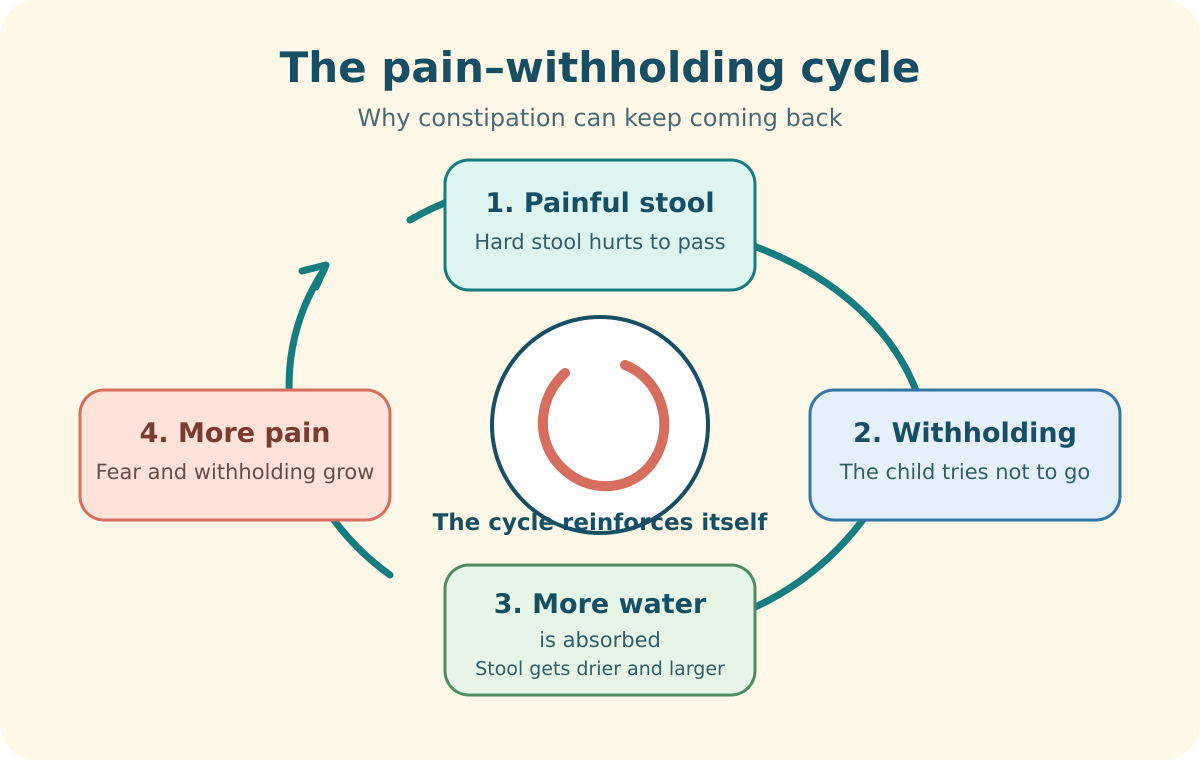
How resistant constipation in children becomes a cycle
Functional constipation often begins around a transition, such as toilet learning, starting school, travelling or recovering from an illness. A single painful bowel movement—or worry about using an unfamiliar bathroom—can start the cycle.
- An unpleasant bowel movement: A hard or large stool hurts, or the child feels anxious about using the toilet.
- Stool withholding: To avoid discomfort, the child consciously or unconsciously holds stool in. Common signs include crossing the legs, standing on tiptoe, stiffening, rocking or hiding.
- More water is absorbed: The longer stool remains in the colon, the more water the body removes from it. The stool becomes drier, firmer and often larger.
- Pain is reinforced: The next bowel movement may hurt even more, strengthening the child’s fear and encouraging further withholding.

Withholding can look like straining
A child who stiffens, squeezes the buttocks or rocks may appear to be trying to pass stool. Often, they are doing the opposite: using their muscles to hold it in. Calm observation is more useful than pressure or punishment.
Why soiling can be a sign of persistent constipation in children
As retained stool builds up, the rectum can stretch and become less sensitive to normal signals. Softer or liquid stool may then pass around the hard stool and leak into underwear. This is called overflow incontinence or encopresis.
Families may understandably mistake this leakage for diarrhea. In a child with hard stools, withholding or infrequent bowel movements, however, repeated smearing or loose leakage can point to significant stool retention. Soiling is usually involuntary.

| Clue | Constipation-related overflow | Typical acute diarrhea |
|---|---|---|
| Stool pattern | Hard, large or infrequent stools between leaks | Repeated loose or watery stools |
| Behaviour | Withholding postures or fear of stooling | Usually urgency rather than withholding |
| Soiling | Smears or leakage, often without awareness | Larger loose bowel movements with awareness or urgency |
| Next step | Patterns can overlap. Seek clinical advice if you are unsure, symptoms persist or warning signs appear. | |
Treating resistant constipation in children: stepping out of the cycle
Persistent or recurrent childhood constipation deserves an individualized assessment. A clinician considers the child’s age, growth, symptoms, examination and previous treatment before recommending a plan.
1. Address retained stool first
When a large amount of stool has accumulated, maintenance measures alone may not be enough. A clinician may recommend a disimpaction or “cleanout” plan before maintenance treatment. Polyethylene glycol (PEG 3350) is one option clinicians commonly consider, but the product, dose and timing should be selected with a healthcare professional for the individual child.
2. Keep stools comfortable consistently
Once retained stool is cleared, a clinician-guided maintenance plan may be needed for months rather than days. The goal is usually regular, soft, comfortable bowel movements while the stretched rectum recovers and the fear of pain fades. Do not start, stop or change a laxative plan without guidance from your child’s healthcare professional.
3. Rebuild a calm bathroom routine
- Offer predictable toilet sitting, often after meals, if advised for your child.
- Support the feet so the child feels stable and can relax.
- Use neutral, encouraging language and praise participation rather than stool output.
- Work with school staff when bathroom privacy, access or anxiety contributes to withholding.
- Keep a brief stool and symptom record to share with the clinician.
4. Expect some relapses
Symptoms may recur during illness, travel, school changes or toilet-learning setbacks. A relapse is a reason to revisit the plan early, not evidence that the child or family has failed. The American Academy of Pediatrics offers a helpful overview of constipation and bowel habits in children, while the NIDDK/NIH constipation guide reviews symptoms, diagnosis and treatment.
Often reassuring
- The child is active, drinking and generally well.
- Pain is brief and linked to trying to pass a hard stool.
- There are recognizable withholding postures.
- A small bright-red streak appears only on the outside of a hard stool or toilet paper, which can occur with a small fissure—but should still be discussed if recurrent.
Warning signs: when to seek medical care
Contact your child’s doctor
- Constipation lasts longer than about two weeks, keeps returning or is not improving with the clinician’s plan.
- Painful bowel movements, withholding or soiling are frequent.
- There is recurrent blood, urinary symptoms, poor appetite, weight loss or concern about growth.
- Constipation began in the first weeks of life or there are other ongoing health concerns.
Seek urgent or emergency care
Get urgent medical help for green (bilious) vomiting, a markedly swollen or firm abdomen, severe or steadily worsening abdominal pain, inability to keep fluids down, signs of dehydration, significant rectal bleeding, unusual sleepiness or weakness, or a child who appears seriously unwell. Call 911 for a life-threatening emergency or go to the nearest emergency department.
How your pediatrician can help
When families come to the clinic feeling defeated by chronic constipation, the first and most important step is taking time to listen and offer reassurance. Your pediatrician will begin with a detailed history and physical examination, looking for warning signs that could point to conditions such as hypothyroidism, celiac disease or an anatomic problem. Tests are not required for every child, but may be recommended when the history or examination suggests another cause.
When the findings are consistent with functional constipation, care for resistant constipation in children begins by demystifying the pain–withholding cycle and providing a clear, individualized written plan. This may outline a clinician-directed approach to initial disimpaction and longer-term maintenance using an osmotic, minimally absorbed option such as polyethylene glycol (PEG 3350). The specific product, dose, duration and adjustments must be chosen for the individual child; families should not begin or change a cleanout or laxative regimen without medical guidance.
Managing persistent constipation is often a long-term partnership. Regular follow-up allows the care team to monitor progress, adjust treatment as rectal sensation and muscle tone recover, and troubleshoot relapses. When additional support is needed, your pediatrician may involve a pediatric gastroenterologist, dietitian or pediatric mental-health professional with expertise in toileting, anxiety or behavioural concerns.
Calgary resources for parents
- Health Link 811: Call 811 for 24/7 health advice from Alberta Health Services.
- MyHealth Alberta: Constipation in Children: Alberta-focused care information and links to healthcare services.
- Calgary Children’s Clinic and Dr. Neel Saini’s pediatrician profile: Clinic and physician information.
- Alberta Children’s Hospital Emergency Services: Facility information; for an emergency, use the nearest appropriate emergency department or call 911.
Additional trustworthy parent information is available from SickKids/AboutKidsHealth on constipation and soiling and the Canadian Paediatric Society’s healthy bowel habits guide. Parents of babies may also find our article on constipation in infants versus infant dyschezia useful.
Medical disclaimer: This article provides general educational information and cannot diagnose or treat an individual child. Constipation can have different causes. Discuss persistent symptoms and any medication, laxative, supplement, formula or procedure with your child’s qualified healthcare professional.
Estimated reading time: 7 minutes